
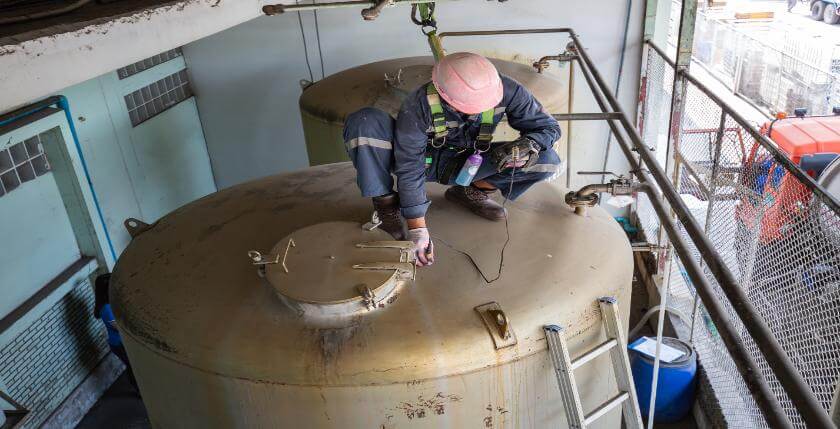
Tank Decommissioning
Enquire Today For A Free No Obligation Quote
At Tank Decommissioning, we specialise in the safe removal, cleaning, or repurposing of storage tanks that are no longer in use.
The process ensures that tanks are emptied, decontaminated, and disposed of or repurposed in compliance with UK environmental and safety regulations.
As hazardous substances, fuel residues, or chemical waste may be present, professional decommissioning prevents environmental contamination and regulatory breaches.
Get in touch for a professional assessment today.
Why Is Tank Decommissioning Important?
Decommissioning a tank ensures safety, regulatory compliance, and environmental protection.
If old tanks are left untreated, they can leak hazardous substances, pose fire risks, or cause structural hazards.
Proper decommissioning prevents groundwater contamination, toxic fume buildup, and costly fines for non-compliance.
Since UK law requires safe handling of redundant fuel and chemical storage, professional decommissioning guarantees legal compliance and risk-free disposal.
When Is Tank Decommissioning Required?
Tank decommissioning is required when a tank is no longer in use, has become unsafe, is obsolete, or needs to be removed for site redevelopment. It is also necessary if a tank fails inspection or no longer complies with environmental or safety regulations.
What Are the Steps in the Tank Decommissioning Process?
Tank decommissioning typically involves draining, cleaning, degassing, and either removal or filling.
First, any remaining liquid, sludge, or hazardous residue is safely extracted and disposed of according to UK waste management regulations.
The tank is then cleaned and degassed to remove flammable vapours. Depending on site conditions, the tank is either excavated and removed or filled with an inert substance such as foam or concrete.
A final safety inspection and certification confirm that the tank has been decommissioned correctly.
How Much Does Tank Decommissioning Cost?
The cost of tank decommissioning is £1,000 for small domestic tanks to £10,000+ for large commercial or industrial tanks.
The cost of tank decommissioning depends on tank size, location, contents, and the required method of disposal.
Factors such as site accessibility, hazardous waste handling, and regulatory permits may affect the total cost.
A professional assessment ensures an accurate, tailored quote for safe and compliant decommissioning.
What Are the Benefits of Tank Decommissioning?
Tank decommissioning eliminates environmental hazards, ensures legal compliance, and prevents costly leaks or contamination by safely removing or repurposing unused storage tanks.
Key benefits include:
- Prevents Leaks & Environmental Damage – Reduces the risk of fuel, chemical, or hazardous waste spills.
- Ensures Compliance with UK Regulations – Meets legal requirements under environmental and health & safety laws.
- Reduces Fire & Safety Risks – Eliminates the dangers of storing flammable or toxic substances in disused tanks.
- Avoids Costly Fines & Liability – Prevents legal action from regulatory authorities for improper tank management.
- Creates Space for New Uses – Frees up valuable land or facility space for redevelopment or alternative storage solutions.
- Supports Sustainable Waste Management – Allows for tank recycling or repurposing, reducing landfill waste.
- Improves Property Value & Site Safety – Enhances site usability by removing outdated and potentially hazardous equipment.
How Long Does Tank Decommissioning Take?
Small tanks can be safely decommissioned in a few hours, while larger or complex industrial tanks may take several days.
The duration of the decommissioning process depends on tank size, contamination level, and site conditions.
As professional decommissioning minimises disruption, businesses and property owners benefit from efficient and safe service completion.
Is Tank Decommissioning a Legal Requirement?
Tank decommissioning must comply with UK environmental and health & safety regulations, including the Control of Pollution (Oil Storage) Regulations 2001 and Environmental Protection Act 1990.
Businesses and property owners are legally responsible for ensuring safe removal, cleaning, and disposal of storage tanks.
Failing to decommission a redundant tank properly can result in fines, legal action, and environmental damage.
What Happens to the Tank After Decommissioning?
Once a tank is decommissioned, it can be removed and scrapped, repurposed for alternative storage, or left in place and filled with an inert material.
Steel tanks are often recycled or reused, while underground tanks may be backfilled to prevent structural collapse.
A certification of decommissioning is provided to confirm compliance with environmental regulations.
Can an Old Tank Be Repurposed Instead of Removed?
In some cases, tanks can be repurposed for water storage, alternative fuels, or non-hazardous material containment.
Repurposing depends on the tank’s condition, structural integrity, and compliance with safety standards.
A professional assessment determines whether a tank is suitable for reuse or requires removal.
Why Choose Us for Tank Decommissioning?
We provide safe, efficient, and fully compliant tank decommissioning services for commercial, industrial, and domestic properties.
As environmental protection and safety are critical, we use specialist equipment and certified disposal methods to ensure risk-free tank removal or repurposing.
With competitive pricing, expert advice, and minimal site disruption, we guarantee a smooth and legally compliant decommissioning process.
How Do I Know If My Tank Needs Decommissioning?
If a tank is no longer in use, shows signs of corrosion, leaks, or structural deterioration, or no longer meets UK safety regulations, it should be decommissioned to prevent potential hazards.
Can Underground Tanks Be Decommissioned Without Removal?
If excavation is impractical, in-situ decommissioning can be carried out by cleaning the tank and filling it with an inert material to prevent environmental risks.
What Happens to the Tank After Decommissioning?
Depending on its condition, the tank may be removed and recycled, repurposed for alternative storage, or left in place and safely filled.
A certification of decommissioning is provided to confirm compliance.
Is There a Legal Requirement for Tank Decommissioning?
UK regulations such as the Control of Pollution (Oil Storage) Regulations 2001 and the Environmental Protection Act 1990 require proper handling of redundant storage tanks to prevent leaks and contamination.
How Do I Get a Free Quote?
Simply contact our team through our online enquiry form with details about your tank size, type, location, and condition.
Our experts will assess your requirements and provide a tailored, no-obligation quote.
Get your free quote today and receive a fast response.
Find More Info
Make sure you contact us today for a number of great tank decommissioning services in Barking.
For more information on tank decommissioning in Barking IG11 8, fill in the contact form below to receive a free quote today.
★★★★★
“The tank was decommissioned safely and efficiently. The process was smooth, fully compliant, and handled with great care. Highly recommend!”
Claudia Everridge
Greater London
★★★★★
“Excellent tank decommissioning service. Everything was completed professionally, and the site was left clean and secure. Very satisfied with the results!”
Derek Farnsworth
Greater London